Signed in as:
filler@godaddy.com
Signed in as:
filler@godaddy.com
Effective emergency services training depends on knowledgeable instructors who understand how to teach, evaluate, and lead learning in high-risk environments. The Emergency Services Instructor Training Program at Canadian Fire Rescue College prepares students to deliver, develop, evaluate, and supervise training within fire departments, emergency services organizations, industrial response teams, training institutions, and other operational environments.
This industry-aligned program provides NFPA 1041 Emergency Services Instructor training at two progressive certification levels:
Emergency Services Instructor I develops the foundational skills required to deliver prepared lessons, use instructional technology, manage a learning environment, evaluate student performance, and provide safe cognitive and psychomotor instruction.
Emergency Services Instructor II builds on these foundations by preparing students to develop lesson plans, create and validate assessments, coordinate training resources, supervise other instructors, evaluate instructional delivery, and support broader training-program administration.
Training is delivered through a blended model that combines self-paced online theory, scheduled in-person instruction, written examinations, actual student teaching experience, and formal final evaluation.
Students at both levels must complete at least 16 hours of instruction in actual student classes. This requirement may be completed at CFRC or within an approved departmental training environment. Departmental instruction must be video captured for review and may include certification courses, regular department training nights, or other relevant instructional activities approved by CFRC.
All 16 hours of actual student instruction must be completed before the student attends the final certification evaluation.
No firefighting certification is required to enrol in Emergency Services Instructor I. Students do not need to hold NFPA 1001, NFPA 1010, or another firefighter certification before beginning the program. Emergency Services Instructor I is the only instructional prerequisite for admission into Emergency Services Instructor II.
The program is suitable for firefighters, emergency medical personnel, industrial emergency responders, department trainers, training officers, public-safety educators, and other individuals who deliver or supervise emergency services training.
Explore the sections below to learn more about each level, course schedules, prerequisites, training delivery, tuition, certification, and the required teaching practicum.
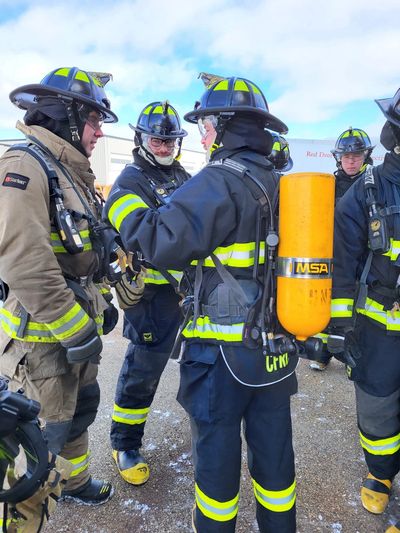
Emergency Services Instructor I
NFPA 1041 Emergency Services Instructor I prepares students to deliver training from approved lesson plans within an established fire, emergency services, industrial, or public-safety training program.
Instructor I focuses primarily on instructional delivery. Students learn how to prepare a learning environment, communicate effectively, adapt instructional methods to student needs, use training aids, maintain safety, and evaluate whether students have achieved the required learning outcomes.
Training may include:
Instructor I is intended for individuals who deliver prepared training content, assist with department training, instruct practical skills, facilitate certification programs, or are preparing for formal instructional responsibilities.
Emergency Services Instructor II
NFPA 1041 Emergency Services Instructor II is designed for experienced instructors who are responsible for developing instructional materials, creating evaluation tools, coordinating training resources, and supervising the delivery of training.
Instructor II moves beyond delivering established lesson plans. Students learn how to develop and revise instructional content, evaluate other instructors, create testing instruments, analyze student performance, manage training resources, and contribute to the administration of a fire or emergency services training program.
Training may include:
Instructor II is intended for department training officers, lead instructors, program coordinators, senior instructors, curriculum developers, and personnel responsible for supervising or managing training delivery.
Emergency Services Instructor I is required before a student may enrol in Emergency Services Instructor II.
Students must successfully complete the applicable online component before attending their scheduled in-person training.
Each student must also complete at least 16 hours of actual student instruction before attending the final evaluation. The teaching practicum may be completed:
Departmental instruction must be video captured and submitted in accordance with CFRC requirements.
All in-person training and evaluations are hosted at Canadian Fire Rescue College’s campus at 3420 22 Street in Springbrook, Red Deer County, Alberta, unless an approved departmental teaching assignment is arranged.
_______________________________
2026 Course Schedule
Class 263ESI1: EMERGENCY SERVICES INSTRUCTOR I
Weekend schedule with a separate teaching practicum and final evaluation
Application Deadline: July 15, 2026
In-Person Instruction: August 15, 2026
Written Examination: August 16, 2026
Required Teaching Practicum: Minimum 16 hours completed before final evaluation
IFSAC/Pro Board Final Evaluation: September 5, 2026
_______________________________
Class 264ESI2: EMERGENCY SERVICES INSTRUCTOR II
Weekend schedule with a separate teaching practicum and final evaluation
Application Deadline: September 10, 2026
In-Person Instruction: October 10, 2026
Written Examination: October 11, 2026
Required Teaching Practicum: Minimum 16 hours completed before final evaluation
IFSAC/Pro Board Final Evaluation: November 7, 2026
_______________________________
2027 Course Schedule
Class 271ESI1: EMERGENCY SERVICES INSTRUCTOR I
Weekend schedule with a separate teaching practicum and final evaluation
Application Deadline: January 6, 2027
In-Person Instruction: March 6, 2027
Written Examination: March 7, 2027
Required Teaching Practicum: Minimum 16 hours completed before final evaluation
IFSAC/Pro Board Final Evaluation: April 15, 2027
_______________________________
Class 272ESI2: EMERGENCY SERVICES INSTRUCTOR II
Weekend schedule with a separate teaching practicum and final evaluation
Application Deadline: March 29, 2027
In-Person Instruction: May 29, 2027
Written Examination: May 30, 2027
Required Teaching Practicum: Minimum 16 hours completed before final evaluation
IFSAC/Pro Board Final Evaluation: July 8, 2027
_______________________________
Wait List Options
Due to the specialized nature of Emergency Services Instructor training, scheduled classes may have limited capacity.
Applicants may select a Wait List option when a scheduled course is unavailable or full. Additional sessions may be organized when there are enough qualified applicants and instructors are available.
Applicants selecting a Wait List option will be contacted if another course can be scheduled. Placement on the wait list does not guarantee that a course will run during a specific period or that the resulting schedule will work for every applicant.
Canadian Fire Rescue College maintains a comprehensive admissions policy that all prospective students are encouraged to review prior to applying. Key eligibility requirements for this program include:
Emergency Services Instructor I
No firefighting certification is required.
Applicants do not need to hold:
Applicants must meet CFRC’s general admission and registration requirements, which may include:
Prior experience in firefighting, emergency medical services, industrial response, public safety, education, or workplace training may be beneficial but is not required unless specified by CFRC Admissions.
Emergency Services Instructor II
Emergency Services Instructor I is the only instructional certification prerequisite for Emergency Services Instructor II.
Applicants must provide proof of successful completion of:
No firefighter certification is required for admission into Instructor II.
Canadian Fire Rescue College offers payment plan options across all training programs, allowing students to manage tuition costs without paying the full amount upfront. Eligible students may apply for a payment plan as part of the program application process.
Our programs are considered part-time and are not currently eligible for government-funded student loans or grants. Students typically arrange financing through personal savings or private loans from banks or financial institutions.
2026 Pricing
ESI Level I: NFPA 1041 Level I
Application Fee: $150.00
Remaining Tuition: $1,110.00
TOTAL: $1,260.00 (Application Fee forms part of overall tuition)
ESI Level II: NFPA 1041 Level II
Application Fee: $150.00
Remaining Tuition: $1,110.00
TOTAL: $1,260.00 (Application Fee forms part of overall tuition)
2027 Pricing
ESI Level I: NFPA 1041 Level I
Application Fee: $150.00
Remaining Tuition: $840.00
TOTAL: $990.00 (Application Fee forms part of overall tuition)
ESI Level II: NFPA 1041 Level II
Application Fee: $150.00
Remaining Tuition: $840.00
TOTAL: $990.00 (Application Fee forms part of overall tuition)
The 2027 tuition amounts above do not include a separate application fee unless confirmed by CFRC.
Tuition must be paid by the applicable deadline before students attend the in-person component.
Tuition payments cannot be made until a student has submitted an application and been accepted into the program.
Each level of the Emergency Services Instructor program is delivered in a blended format. Students complete online theory before attending scheduled in-person instruction, completing a written examination, delivering at least 16 hours of actual student instruction, and attending a separate final evaluation.
Emergency Services Instructor I
Online Component
The Instructor I online component includes:
Students must successfully complete the Instructor I online component before attending the scheduled in-person class.
In-Person Instruction and Written Examination
The scheduled campus component includes:
Every Instructor I student must deliver at least 16 hours of actual instruction to real students.
The teaching practicum may be completed:
Departmental teaching must be video captured so the student’s instructional performance can be reviewed.
The 16-hour requirement must be completed before the final evaluation. Students who have not completed and documented all required teaching hours will not be permitted to complete the final certification evaluation.
Final Evaluation
Students complete a separate formal evaluation after the online learning, in-person instruction, written examination, and teaching practicum have been completed.
Successful students may be eligible for IFSAC and Pro Board certification at the Instructor I level.
Emergency Services Instructor II
Online Component
The Instructor II online component includes:
Students must successfully complete the Instructor II online component before attending the scheduled in-person class.
In-Person Instruction and Written Examination
The scheduled campus component includes:
Every Instructor II student must complete at least 16 hours of actual instruction within a real student-learning environment.
The practicum may include:
Instruction completed within a department or external organization must be video captured for review.
All 16 hours must be completed and documented before the Instructor II final evaluation.
Final Evaluation
Students complete a separate formal evaluation after satisfying the online, classroom, written-examination, teaching-practicum, and prerequisite requirements.
Successful students may be eligible for IFSAC and Pro Board certification at the Instructor II level.
The Emergency Services Instructor Training Program covers two NFPA certification levels:
Successful graduates may be eligible to apply for and receive IFSAC and Pro Board® certification for the level completed.
Emergency Services Instructor I is required before a student may enrol in or receive certification for Emergency Services Instructor II.
No NFPA firefighter certification is required for either Instructor level.
IFSAC and Pro Board® certifications are widely recognized by fire departments, emergency services agencies, industrial organizations, and training institutions. Individual employers and jurisdictions may establish their own certification, experience, education, and promotional requirements.
For further information regarding the Pro Board®, visit www.theproboard.org
Emergency Services Instructor training develops instructional, evaluation, curriculum, and training-program skills that may support a wide range of fire, emergency services, industrial, and public-safety roles.
Emergency Services Instructor I
Instructor I may support roles involving:
Emergency Services Instructor II
Instructor II may support roles involving:
Some departments require Emergency Services Instructor certification before personnel may provide formal training, participate in certification delivery, serve as a training officer, or qualify for promotion.
Certification does not guarantee employment or promotion. Individual organizations determine their own experience, educational, certification, and operational requirements.
This program is exempt from licensing via Alberta Advanced Education due to the short duration of the program, and its skills-updating nature.
Canadian Fire Rescue College provides free, on-site student accommodation to support enrolled students during their firefighter and emergency services training. Single-occupancy rooms and shared facilities are available on campus, allowing students to focus on learning, rest, and performance without the added stress of securing housing.
Click here to learn more about student accommodation at CFRC.
The only fees that students may encounter that not included with their tuition are:
Class B uniform:
Fire and Emergency Services Instructor: Principles and Practice, Third Edition:
IFSAC and Pro Board Certification fees:
Food during your stay:
Travel costs to and from campus:
Before you apply, it is a good idea to reach out to an admissions specialist.
You can book a video chat appointment with one, or send them an email. Click here to get started.
Ready to apply? Click on the link here to begin the application package.
Copyright © 2026 Canadian Fire Rescue College